
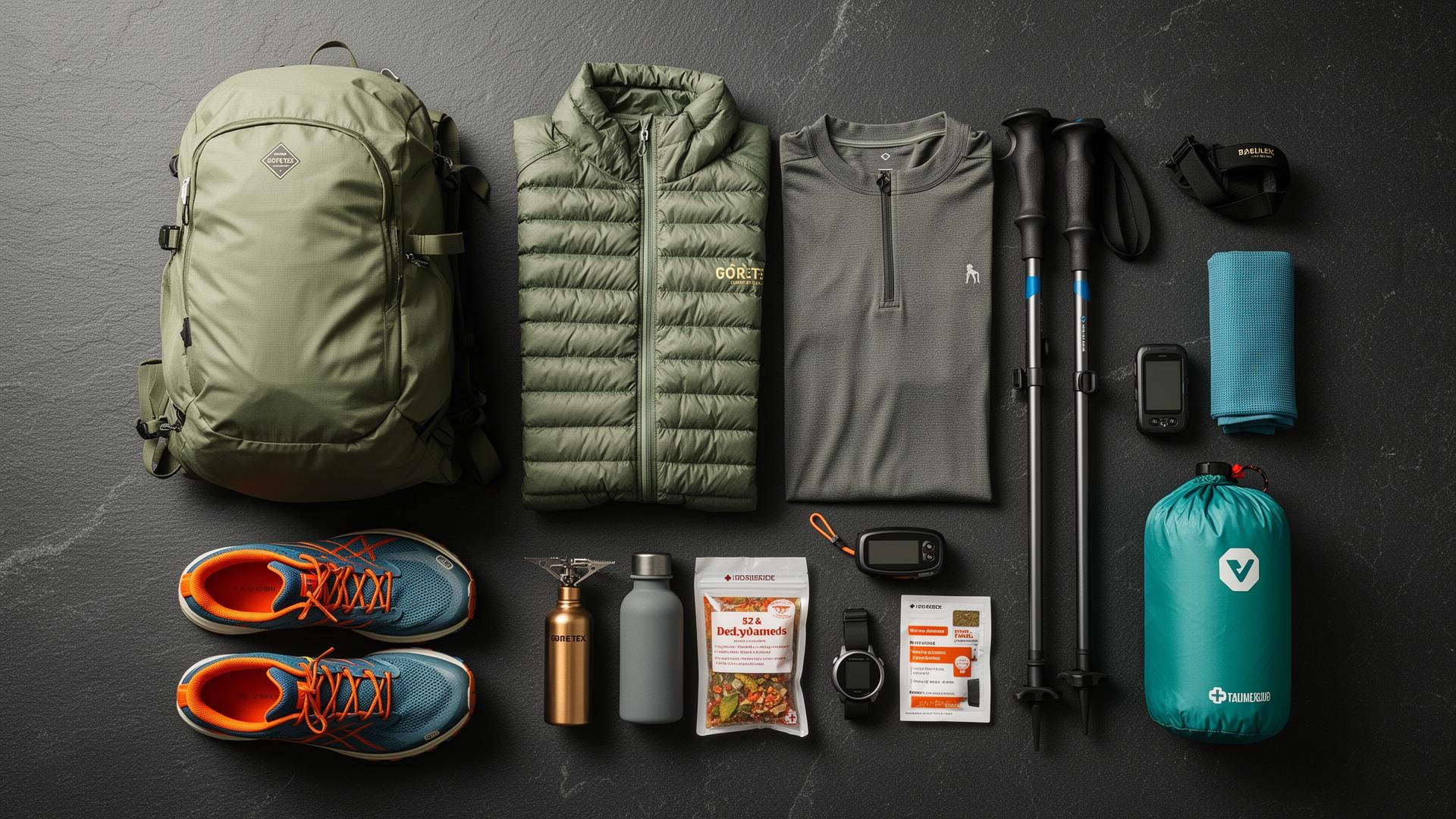
How the Trailpack kit list planner works
Trailpack is a free hiking kit list planner built for multi-day trails. Instead of handing you a generic checklist, it builds a packing list calibrated to your specific trip — the trail you've chosen, the month you're walking, how many nights you'll be out, whether you're carrying everything yourself or using a baggage transfer service, and your hiking persona (lightweight thru-hiker, comfort-first hut-to-hut walker, fastpacker, or trail runner).
Behind the scenes, our packing engine combines climate data for each trail with real-world gear weights and volumes. The result is a recommended kit list with accurate pack weight estimates — so you know whether your bag will come in under a transfer operator's weight limit before you start filling it.
Built for popular long-distance trails
Every trail has its own quirks, and a good packing list reflects that. Trailpack currently supports over 100 multi-day routes across the UK, Europe and beyond, including:
- West Highland Way (Scotland, 154 km) — wet and midgy in summer, cold and exposed in shoulder season. Recommendations lean towards waterproof shells, midge protection in June–August, and warm layers year-round.
- Tour du Mont Blanc (France/Italy/Switzerland, 170 km) — high alpine passes mean you need real insulation and sun protection even in July. Hut-based itineraries trim sleeping kit; camping versions add a tent and stove.
- Camino Francés (Spain, 500+ km) — long, hot, hostel-based walking where pack weight is everything. The list strips back to essentials and prioritises blister-prevention kit and lightweight, quick-dry clothing.
- Pennine Way & Coast to Coast (England) — peat bogs, moorland weather and self-supported wild camping push the kit towards a more robust waterproof setup and reliable navigation.
- GR221 Dry Stone Route (Mallorca) — warm Mediterranean climate with rocky underfoot conditions; lighter clothing, sturdier shoes, plenty of water capacity.
Calibrated for your style of hiking
The same trail looks very different depending on how you walk it. A lightweight thru-hiker on the West Highland Way carries a sub-7 kg pack and a tarp; a comfort-focused walker doing the same route hut-to-hut might carry only a daypack with a transfer service moving the main bag. Trailpack adjusts your kit list — and the per-bag weight estimates — to match.
You can also tweak the cooking style (no-cook, stove, camp kitchen), accommodation mix (hotels, hostels, huts, wild camping), party size and shared kit, and any optional extras (trekking poles, bear canister, sleeping bag liner). The list and weight totals update as you go.
Why pack weight matters
Most baggage transfer operators on routes like the West Highland Way, Camino, and Tour du Mont Blanc enforce a per-bag weight limit (typically 15–20 kg). Going over means surcharges or having to repack at the start of the trail. For self-supported walkers, every kilo above ~10% of body weight noticeably slows pace and increases injury risk over multi-day distances. Trailpack shows your projected pack weight up front so you can swap items, share kit between bags, or adjust your support style before you commit.
Ready to get started? and Trailpack will build your packing list in seconds.